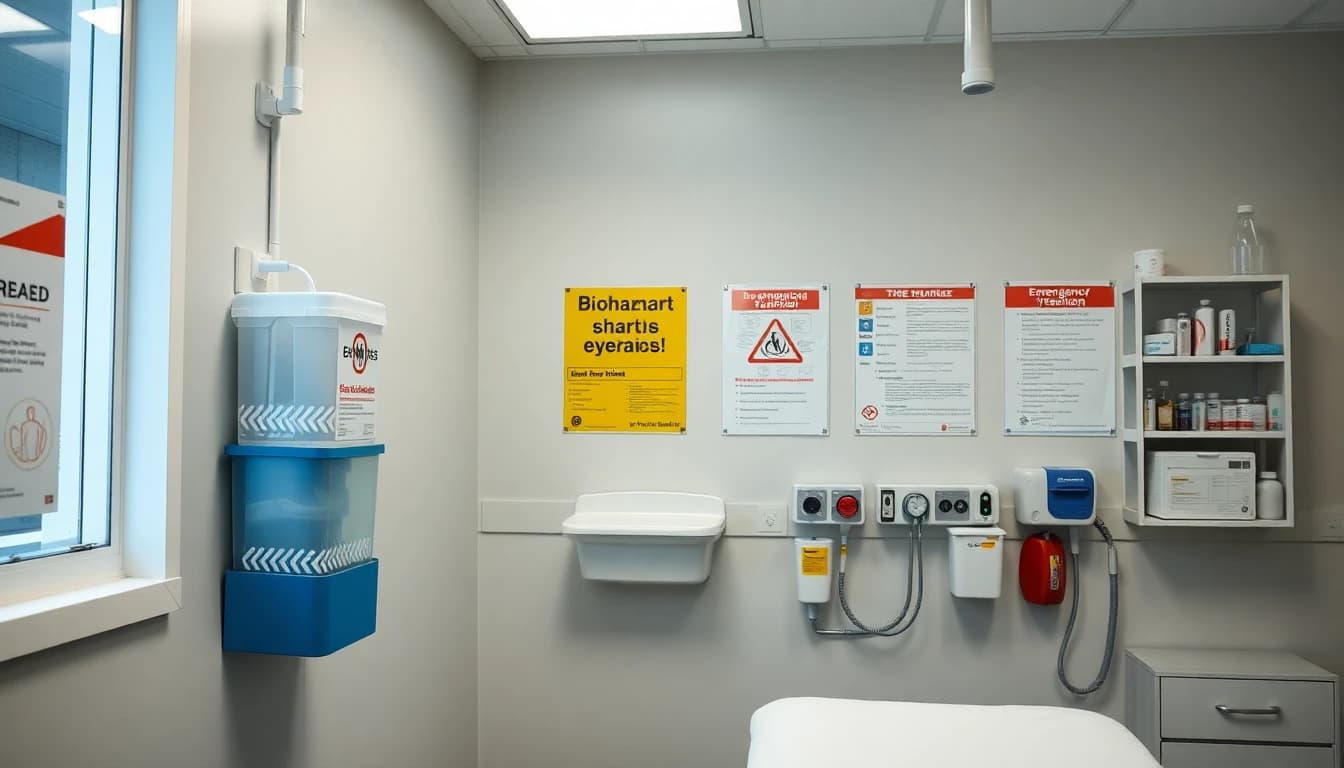
Why clinics need specialized employee handbooks
Medical and dental clinics face regulatory requirements that make a generic employee handbook dangerously inadequate. Between HIPAA privacy and security rules, OSHA bloodborne pathogen standards, patient safety protocols, professional licensing requirements, and DEA controlled substance regulations, clinic handbooks must address a regulatory landscape that most other industries never encounter.
The consequences of non-compliance are also more severe. HIPAA violations can result in fines up to $1.5 million per violation category per year. OSHA citations in healthcare settings carry penalties that have increased significantly in recent years. And a single patient safety incident caused by inadequate training or documentation can generate malpractice claims that threaten the entire practice.
Essential handbook sections for clinics
HIPAA privacy and security policies
HIPAA compliance must be woven throughout your handbook, not treated as a standalone section:
Privacy Rule requirements:
- Definition of Protected Health Information (PHI) and how to identify it
- Minimum necessary standard (access only the PHI needed for your job function)
- Patient rights (access, amendment, accounting of disclosures, restriction requests)
- Permitted uses and disclosures (treatment, payment, healthcare operations)
- Authorization requirements for non-routine disclosures
- Business associate relationship management
- Breach notification procedures and employee reporting obligations
Security Rule requirements:
- Physical safeguards (workstation security, device positioning, screen locks)
- Technical safeguards (password policies, access controls, encryption)
- Administrative safeguards (security awareness training, access management)
- Electronic PHI handling procedures
- Mobile device policies (personal phones, tablets, laptops)
- Social media restrictions regarding patient information
- Email and texting policies for patient communication
Employee-specific HIPAA obligations:
- Signed confidentiality agreements upon hire
- Annual HIPAA training requirements
- Consequences for HIPAA violations (discipline up to termination and personal liability)
- How to report suspected breaches or violations
- Prohibition on accessing records of patients not in your care (including family, friends, and celebrities)
OSHA bloodborne pathogen exposure control
Every clinic must have a written Exposure Control Plan. Your handbook should reference this plan and cover:
- Employee exposure determination by job classification
- Universal precautions and standard precautions requirements
- PPE requirements by task (gloves, gowns, masks, eye protection)
- Hepatitis B vaccination offer (free to all employees with occupational exposure)
- Sharps safety and needlestick prevention
- Exposure incident procedures (immediate response, reporting, post-exposure evaluation)
- Biohazardous waste handling and disposal
- Laundry handling procedures for contaminated items
- Annual training requirements on bloodborne pathogens
Patient safety and care standards
Document the clinical standards that all staff must follow:
- Patient identification verification procedures
- Medication administration safety (if applicable)
- Informed consent documentation
- Infection control protocols
- Hand hygiene compliance
- Sterile technique requirements
- Equipment sterilization and disinfection procedures
- Patient fall prevention
- Emergency response procedures (medical emergencies, code protocols)
- Mandatory reporting requirements (abuse, neglect, communicable diseases)
Professional licensing and credentialing
Clinics employ licensed professionals with ongoing compliance obligations:
- License verification upon hire and periodic reverification
- Continuing education requirements by license type
- Scope of practice limitations
- Supervision requirements for mid-level providers and unlicensed staff
- Consequences of license suspension, revocation, or restriction
- DEA registration requirements for prescribing controlled substances
- Malpractice insurance requirements
- Credentialing and privileging processes
Controlled substance management
If your clinic prescribes or administers controlled substances:
- DEA compliance requirements
- Controlled substance storage and security
- Prescription monitoring program obligations
- Documentation and record-keeping requirements
- Inventory and reconciliation procedures
- Diversion prevention and detection
- Reporting requirements for discrepancies
Compensation and benefits
Healthcare compensation has unique elements:
- Pay structure by position (clinical vs. administrative staff)
- Productivity-based compensation models (if applicable)
- On-call pay policies
- Shift differentials for evenings, nights, and weekends
- Continuing education reimbursement or time off
- License renewal fee coverage
- Malpractice insurance provisions
- Student loan repayment programs (if offered)
Time off and leave policies
Clinic-specific leave considerations include:
- PTO policies that ensure adequate clinical coverage
- Sick leave policies (healthcare workers should not work while ill with communicable conditions)
- FMLA compliance (if 50+ employees)
- State-specific paid leave requirements
- Jury duty and voting leave
- Continuing education leave
- Bereavement leave
- How leave requests are handled to maintain patient care schedules
Workplace safety beyond bloodborne pathogens
Clinics face multiple OSHA hazards:
- Hazardous drug handling (chemotherapy agents, certain medications)
- Chemical safety (disinfectants, sterilization chemicals, laboratory reagents)
- Ergonomic hazards (patient lifting, repetitive motions, sustained postures)
- Workplace violence prevention (healthcare has among the highest rates of workplace violence)
- Radiation safety (if applicable — X-ray equipment, CT scanners)
- Laser safety (if applicable)
- Latex allergy considerations
- TB exposure control (if treating populations with elevated risk)
Technology and electronic health records
Digital systems are central to clinic operations:
- EHR access policies and user responsibilities
- Password management and multi-factor authentication
- Prohibition on shared login credentials
- Audit trail awareness (all EHR access is logged and reviewable)
- Telehealth policies and procedures
- Patient portal management
- Personal device policies for accessing clinic systems
- Social media policies regarding the clinic and patients
Patient communication policies
How staff communicates with patients has regulatory implications:
- Telephone message handling and callback procedures
- Patient portal and secure messaging guidelines
- Text messaging policies (HIPAA-compliant platforms only)
- After-hours communication protocols
- Handling requests for information from family members (verify authorization)
- Media and public relations (who speaks for the clinic)
- Online review response policies
Mandatory training requirements
Healthcare employees face more mandatory training than almost any other industry:
- HIPAA privacy and security (annual)
- Bloodborne pathogen exposure control (annual)
- Fire safety and emergency evacuation (annual)
- Infection control and hand hygiene (annual)
- Cultural competency and health equity
- Workplace violence prevention
- Sexual harassment prevention (as required by state)
- Position-specific clinical competencies
- New equipment and technology training
Document all training with dates, attendees, content covered, and acknowledgment signatures.
State-specific healthcare requirements
California
- Patient access to medical records within 15 days
- Mandatory nurse-to-patient ratios (for certain settings)
- Paid sick leave requirements
- Specific harassment training requirements
New York
- Patient bill of rights posting requirements
- Mandatory sexual harassment training
- Paid family leave
- Specific infection control training requirements
Texas
- Texas Medical Board reporting requirements
- Peer review protections
- Workers compensation requirements specific to healthcare
Florida
- Medical records retention requirements
- Background screening requirements for healthcare workers
- Patient self-determination requirements
Common clinic handbook mistakes
Treating HIPAA as a standalone policy
HIPAA compliance touches every aspect of clinic operations — scheduling, communication, technology, termination. It should be referenced throughout the handbook, not isolated in a single section.
Not addressing personal device use
Staff using personal phones to photograph wounds for documentation, text patient information to colleagues, or access the EHR from unsecured networks create serious HIPAA vulnerabilities. Your handbook must address this explicitly.
Ignoring workplace violence
Healthcare workers face workplace violence at rates significantly higher than other industries. Your handbook should address prevention, de-escalation training, reporting procedures, and post-incident support.
Not updating for regulatory changes
Healthcare regulations change frequently. CMS, OSHA, and state health departments issue new guidance regularly. Your handbook should be reviewed at least annually.
How ComplyStack creates your clinic handbook
ComplyStack generates employee handbooks specifically designed for medical and dental clinics — covering HIPAA compliance, OSHA bloodborne pathogen requirements, patient safety protocols, and all state-specific healthcare regulations for your location. Every handbook addresses the unique regulatory landscape that healthcare practices face.