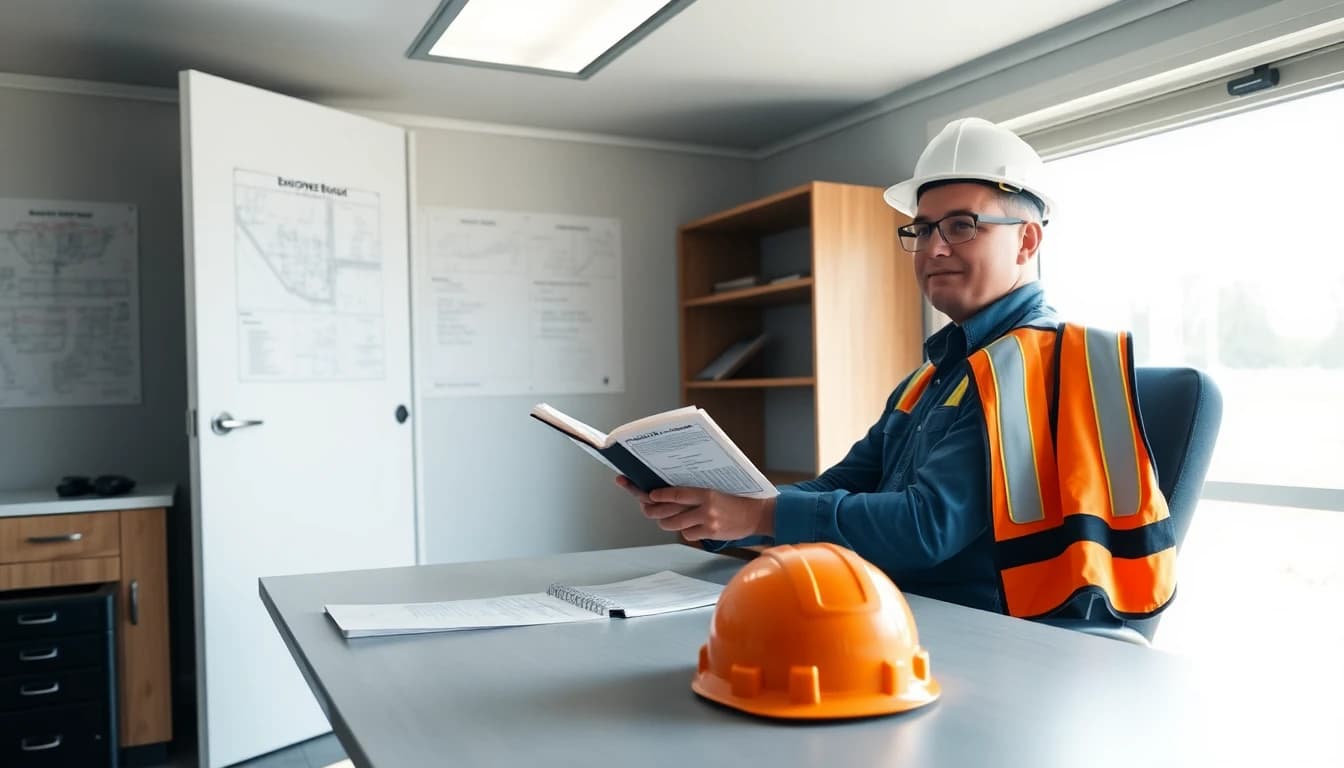
Why every construction site needs a written safety plan
Construction is consistently the most dangerous industry in the United States. The "Fatal Four" — falls, struck-by incidents, electrocutions, and caught-in/between accidents — account for the majority of construction worker fatalities each year.
OSHA's construction standards (29 CFR Part 1926) set extensive requirements for job site safety. But regulations alone don't prevent injuries. A written safety plan translates those regulations into actionable procedures that workers follow every day.
Beyond compliance, a strong safety plan reduces workers' compensation costs, lowers your experience modification rate (EMR), and makes your company more competitive when bidding on projects. Many general contractors and project owners now require subcontractors to submit their safety plan before they'll award a contract.
This guide walks you through building a construction safety plan that satisfies OSHA requirements, wins contracts, and actually keeps your crew safe.
What OSHA requires for construction safety
Construction sites face different OSHA standards than general industry. The key requirements include:
Site-specific safety plans
Every construction project should have a safety plan that addresses the specific hazards of that job site. A residential framing project has different hazards than a commercial demolition job. Your plan should be tailored accordingly.
Competent person designations
OSHA requires a "competent person" for many construction operations — someone who can identify hazards and has authority to take corrective action. You need competent persons designated for:
- Excavation and trenching operations
- Scaffolding assembly and use
- Fall protection systems
- Confined space entry
- Crane operations
- Steel erection
Each competent person designation should be documented with the individual's name, qualifications, and specific authority granted.
Hazard communication
Like all industries, construction sites must maintain a Hazard Communication program with Safety Data Sheets for all chemicals on site, labeled containers, and employee training on chemical hazards.
Fall protection
For construction work at heights of six feet or more above a lower level, employers must provide fall protection. Your safety plan must specify which fall protection methods will be used (guardrails, safety nets, personal fall arrest systems) and how workers will be trained on their use.
Personal Protective Equipment
Construction PPE requirements vary by task but commonly include hard hats, safety glasses, high-visibility vests, steel-toed boots, hearing protection, and respiratory protection. Your plan should specify PPE requirements by task and how compliance will be enforced.
Building your construction safety plan: step by step
Step 1: Company safety policy statement
Start with a clear statement from company leadership committing to workplace safety. This sets the tone and demonstrates that safety comes from the top. Include:
- Company name and description of operations
- Statement of commitment to employee safety and health
- Specific safety goals for the year
- Name and contact information for the safety director
- Statement that all employees are expected to comply with safety requirements
Step 2: Roles and responsibilities
Define who is responsible for what in your safety program:
Company owner/management: Provide resources, set policy, lead by example, review safety performance
Safety director/officer: Develop and update safety plans, conduct training, perform inspections, investigate incidents
Supervisors/foremen: Enforce safety rules, conduct daily briefings, identify and correct hazards, report incidents
Workers: Follow safety procedures, use required PPE, report hazards and incidents, participate in training
Step 3: Hazard assessment
Conduct a systematic assessment of hazards for each type of work your company performs. Walk through each phase of a typical project and identify what could hurt someone.
Organize hazards by category:
Fall hazards: Roof work, scaffolding, ladders, floor openings, elevated platforms, excavation edges
Struck-by hazards: Falling tools and materials, heavy equipment operations, overhead crane loads, flying debris
Electrical hazards: Overhead power lines, temporary wiring, ground fault protection, lockout/tagout procedures
Caught-in/between hazards: Trenching and excavation, heavy equipment, rotating machinery, structural collapse
Health hazards: Silica dust, lead paint, asbestos, noise exposure, heat stress, welding fumes
For each hazard, document the specific controls you'll implement — elimination, substitution, engineering controls, administrative controls, or PPE.
Step 4: Safety procedures by operation
Write specific procedures for each high-risk operation your company performs. These should be detailed enough that a new employee can understand exactly what's required.
Excavation and trenching
- Soil classification procedures
- Protective systems selection (sloping, shoring, shielding)
- Competent person daily inspection requirements
- Utilities location (call 811 procedures)
- Access and egress requirements for trenches over 4 feet deep
- Emergency rescue procedures
Scaffolding
- Erection and dismantling procedures
- Load capacity requirements and labeling
- Guardrail and toe board specifications
- Competent person inspection schedule
- Training requirements for scaffold users and erectors
- Prohibited modifications
Fall protection
- Trigger heights for fall protection (6 feet general, 10 feet scaffolding, 15 feet steel erection)
- Selection criteria for fall protection systems
- Anchor point requirements (5,000 lbs or designed by qualified person)
- Personal fall arrest system inspection procedures
- Rescue plan for suspended workers
- Training and retraining requirements
Electrical safety
- Ground fault circuit interrupter (GFCI) requirements
- Assured equipment grounding conductor program
- Lockout/tagout procedures
- Safe distances from power lines
- Temporary wiring standards
- Portable tool inspection procedures
Step 5: Emergency response procedures
Document procedures for every foreseeable emergency:
Medical emergencies: First aid procedures, emergency contact numbers, nearest hospital routes, who is first aid/CPR certified on each crew
Fire: Fire prevention measures, fire extinguisher locations and types, evacuation procedures, assembly points
Severe weather: Lightning safety procedures, high wind protocols, extreme heat/cold procedures, monitoring responsibilities
Structural collapse or cave-in: Rescue procedures, competent person responsibilities, notification requirements, equipment shutdown protocols
Utility strikes: Gas line, electrical line, and water main strike procedures, emergency contact numbers, evacuation distances
Step 6: Training program
Your training program should cover three areas:
New hire orientation: Company safety policies, general hazard awareness, PPE requirements, emergency procedures, and reporting obligations. Document with signed acknowledgment forms.
Task-specific training: Before any worker performs a new task, they must be trained on the specific hazards and controls. This includes fall protection, scaffolding, excavation, confined space, and any specialized equipment.
Ongoing training: Toolbox talks (weekly safety meetings), annual refresher training, and retraining after incidents or near-misses. Keep dated records of every training session with topics covered and attendee signatures.
Step 7: Inspection and monitoring
Regular inspections catch hazards before they cause injuries. Your plan should include:
Daily inspections: Competent person inspections of excavations, scaffolding, fall protection systems, and any other active operations requiring designated competent persons.
Weekly site inspections: A comprehensive walkthrough covering housekeeping, fire protection, electrical, PPE compliance, and general conditions. Use a standardized checklist and document findings.
Equipment inspections: Pre-use inspections for cranes, forklifts, aerial lifts, and other heavy equipment. Maintain inspection logs accessible at the equipment.
Step 8: Incident investigation and reporting
Create a clear process for reporting and investigating all incidents, including near-misses:
- Immediate actions (secure the scene, provide first aid, notify supervisor)
- Investigation procedures (interview witnesses, photograph scene, document conditions)
- Root cause analysis (identify what failed — equipment, training, procedures, or supervision)
- Corrective actions (what changes will prevent recurrence)
- Follow-up (verify corrective actions were implemented and effective)
OSHA requires immediate notification (within 8 hours) for any workplace fatality and within 24 hours for any amputation, loss of an eye, or inpatient hospitalization.
Common OSHA citations on construction sites
Focus your compliance efforts on the most frequently cited standards:
| Standard | Description |
|---|---|
| 1926.501 | Fall protection (duty to have fall protection) |
| 1926.451 | Scaffolding (general requirements) |
| 1926.1053 | Ladders |
| 1926.503 | Fall protection training |
| 1926.20 | General safety and health provisions |
| 1926.502 | Fall protection systems criteria |
| 1926.405 | Electrical wiring methods |
| 1926.652 | Excavation protective systems |
| 1926.100 | Head protection |
| 1926.102 | Eye and face protection |
Fall protection violations consistently rank as the number one citation in construction. If your safety plan does nothing else well, make sure your fall protection program is comprehensive and rigorously enforced.
Multi-employer worksite responsibilities
On construction sites with multiple employers, OSHA applies a multi-employer citation policy. You can be cited for hazards created by other contractors on the same site. Understanding your role matters:
Creating employer: The employer whose employees created the hazard
Exposing employer: The employer whose employees are exposed to the hazard
Correcting employer: The employer responsible for correcting the hazard
Controlling employer: The employer with general supervisory authority (typically the GC)
Your safety plan should address how you'll coordinate safety with other contractors on multi-employer sites, including pre-construction safety meetings and joint hazard communication.
Making your safety plan work in practice
A safety plan that sits in a binder on a shelf doesn't protect anyone. Here's how to make it a living document:
Daily toolbox talks
Start each day or shift with a brief safety meeting covering the day's specific hazards and controls. Keep these focused (5-10 minutes), relevant to the current work, and document attendance.
Lead from the top
If supervisors don't follow safety rules, workers won't either. Hold supervisors accountable for safety compliance and recognize crews with strong safety records.
Make reporting easy
Workers need a simple, non-punitive way to report hazards and near-misses. The more reports you get, the more hazards you can fix before someone gets hurt.
Update regularly
Review and update your safety plan whenever you take on new types of work, have a significant incident, or regulations change. At minimum, conduct an annual review.
How ComplyStack helps
Writing a construction safety plan that covers all OSHA requirements can take weeks of research. Most contractors either pay a safety consultant thousands of dollars or cobble together templates from the internet that may not be current or state-specific.
ComplyStack generates a comprehensive construction safety plan tailored to your specific trade, state, and operations. Our AI understands construction OSHA standards and creates professional documentation that addresses all the areas inspectors evaluate.
ComplyStack generates site-specific construction safety plans that cover all OSHA requirements. Enter your trade, state, and operations — and download a professional safety plan in minutes. No safety consultant fees required.