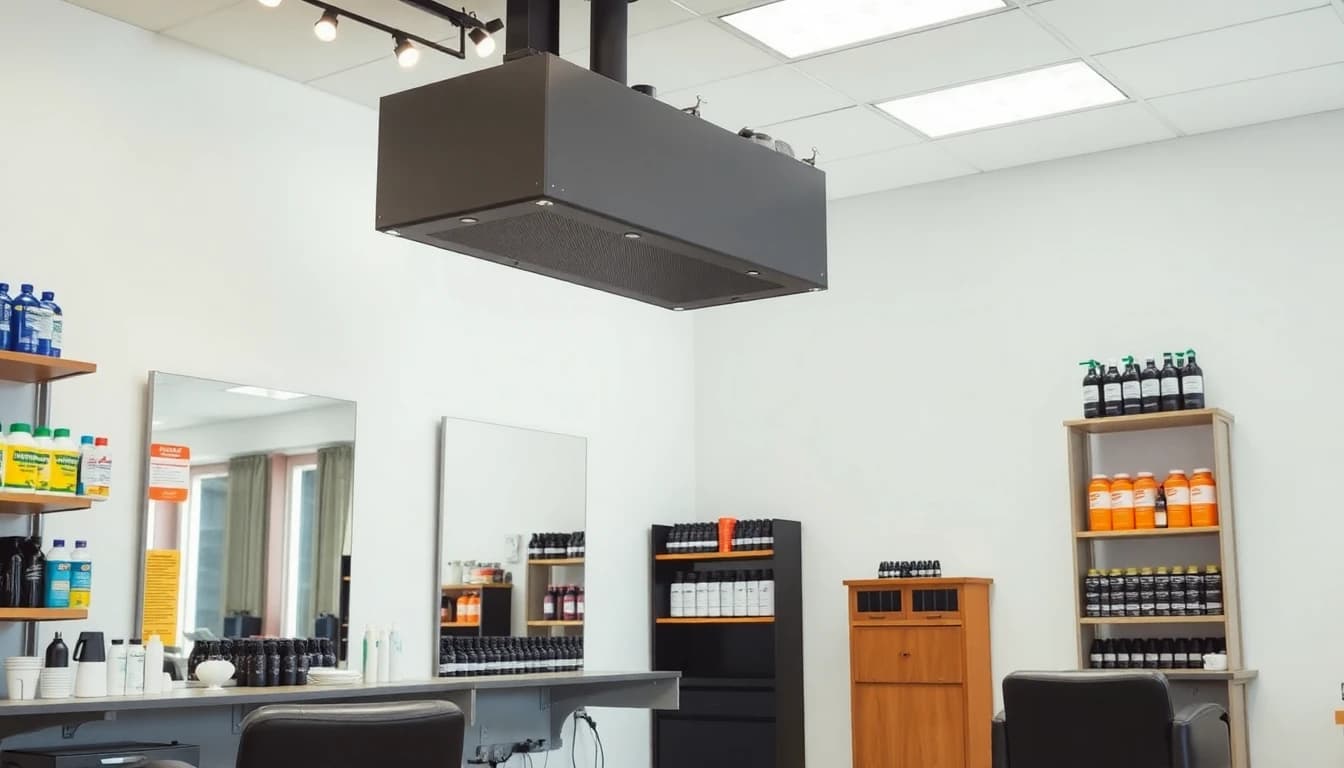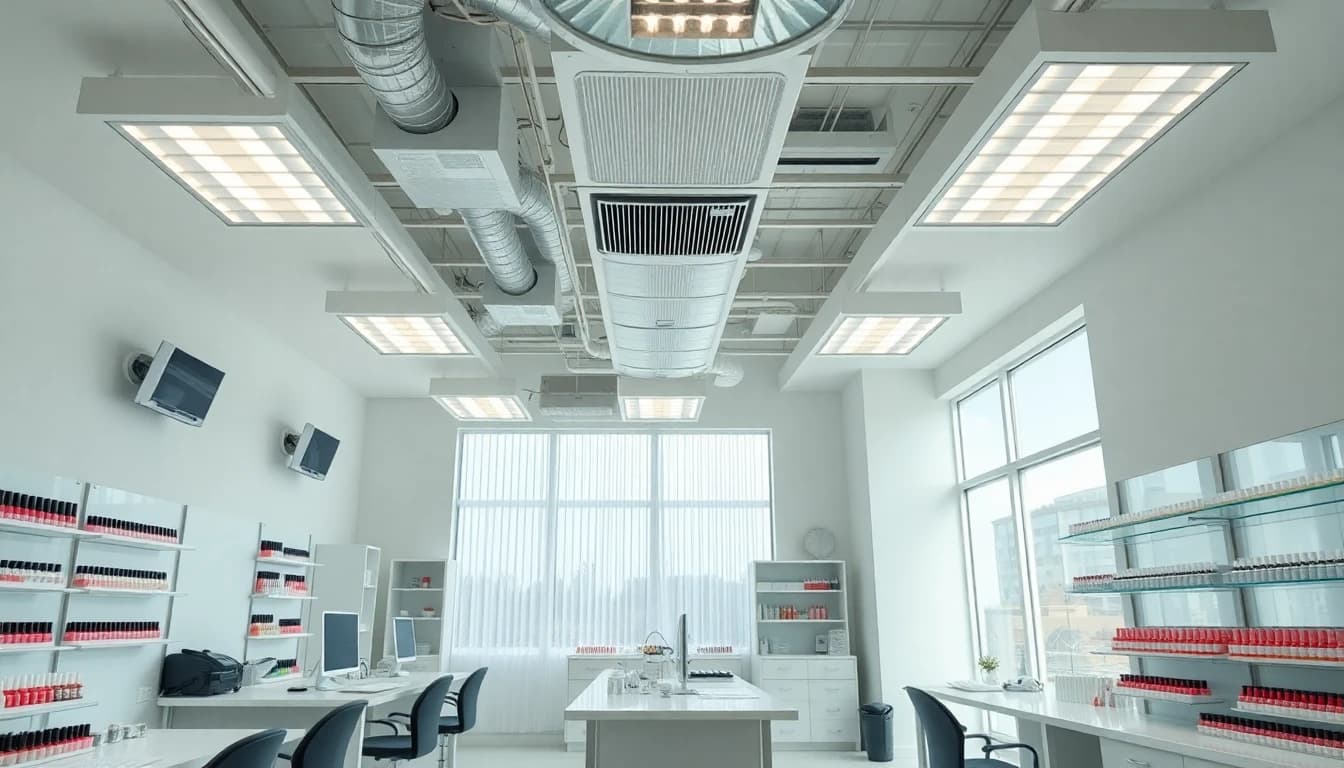
The ventilation problem in nail salons
Nail salon workers are exposed to a cocktail of chemicals every day — acrylics, gels, polishes, acetone, and adhesives all release volatile organic compounds (VOCs) into the air. Without proper ventilation, these chemicals accumulate to levels that cause headaches, dizziness, respiratory problems, and long-term health effects.
OSHA has identified poor ventilation as one of the most common hazards in nail salons. Several states, including California and New York, have enacted specific ventilation requirements that go beyond federal OSHA standards.
Understanding OSHA's ventilation standards
OSHA does not have a single "nail salon ventilation rule." Instead, several OSHA standards apply to nail salon air quality.
Permissible Exposure Limits
OSHA sets Permissible Exposure Limits (PELs) for individual chemicals commonly found in nail salons:
- Toluene: 200 ppm (8-hour TWA)
- Formaldehyde: 0.75 ppm (8-hour TWA), 2 ppm (15-minute STEL)
- Methyl methacrylate (MMA): 100 ppm (8-hour TWA)
- Acetone: 1,000 ppm (8-hour TWA)
- Ethyl methacrylate (EMA): No specific PEL, but general duty clause applies
General Duty Clause
Even for chemicals without specific PELs, OSHA's General Duty Clause (Section 5(a)(1)) requires employers to provide a workplace free from recognized hazards. If your nail technicians are experiencing symptoms from chemical exposure, you may be in violation regardless of whether a specific PEL exists.
Types of ventilation systems for nail salons
Local exhaust ventilation (LEV)
Local exhaust ventilation captures chemical vapors at the source — right at the nail table — before they reach the technician's breathing zone. This is the most effective approach.
Downdraft tables: Built-in ventilation pulls air downward through the table surface and exhausts it outside. These are the gold standard for nail salons.
Portable source capture units: Standalone units with flexible arms that position near the work area. Good for existing salons that cannot modify tables.
Key requirements for LEV systems:
- Must exhaust air to the outside, not recirculate it
- Capture velocity of 100-150 feet per minute at the source
- Filters must be replaced on a regular schedule
- Systems must be inspected and maintained quarterly
General dilution ventilation
General ventilation systems (HVAC) dilute chemical concentrations by exchanging indoor air with fresh outdoor air. While necessary, general ventilation alone is usually insufficient for nail salons.
Minimum requirements:
- 10-12 air changes per hour in service areas
- Fresh air intake from a clean outdoor source
- Exhaust fans vented to the outside
- Separate HVAC zones for service and waiting areas when possible
The best approach: combined systems
OSHA recommends using both local exhaust at each nail station AND adequate general ventilation throughout the salon. Neither system alone provides optimal protection.
State-specific ventilation requirements
Several states have enacted nail salon ventilation requirements that exceed federal OSHA standards.
California
California's Division of Occupational Safety and Health (Cal/OSHA) requires:
- Local exhaust ventilation at each manicure and pedicure station
- Written ventilation maintenance and inspection program
- Air monitoring records if chemical exposure is suspected
- Cal/OSHA PELs are often stricter than federal limits
New York
The New York Nail Salon Ventilation Pilot Program established:
- Ventilation systems must meet specific design criteria
- Annual inspections by qualified professionals
- Written ventilation maintenance plans
- Worker training on ventilation system use and maintenance
Other states with specific requirements
- Oregon: Oregon OSHA has specific guidance for nail salon ventilation
- Massachusetts: State regulations address beauty salon air quality
- Washington: L&I has published nail salon health and safety guidance
Signs your ventilation is inadequate
If any of these conditions exist in your salon, your ventilation likely needs improvement:
- Strong chemical odors persist throughout the day
- Workers experience headaches, eye irritation, or dizziness
- Chemical smells are noticeable in the waiting area
- Nail dust accumulates on surfaces far from work stations
- Windows fog up or show condensation during business hours
- Symptoms improve on days off or during vacation
Setting up a ventilation monitoring program
OSHA may require air monitoring if there is reason to believe chemical exposure exceeds PELs. Even if not required, monitoring helps demonstrate compliance.
What to monitor
- Chemical vapor concentrations at the breathing zone (use passive sampling badges)
- Air flow rates at each exhaust point (use a velometer or anemometer)
- Filter condition and replacement dates
- General room air quality (CO2 levels as a proxy for fresh air exchange)
Documentation requirements
Keep records of:
- Ventilation system specifications and installation date
- Maintenance and filter replacement logs
- Air monitoring results (if performed)
- Employee complaints related to air quality
- Corrective actions taken
Cost-effective ventilation improvements
You do not need to gut your salon to improve ventilation. Start with the most impactful changes:
- Add source capture units at each nail station ($200-$800 per station)
- Replace recirculating units with units that exhaust outside
- Increase fresh air intake in your HVAC system
- Open windows and doors when weather permits (supplement, not replace, mechanical ventilation)
- Switch to low-VOC products to reduce chemical load
- Keep lids on chemical containers when not actively dispensing
How ComplyStack can help
Ventilation requirements vary by state, and building a compliant safety plan that addresses your specific situation takes hours of research. ComplyStack generates state-specific safety plans for nail salons that include ventilation requirements, chemical safety protocols, and employee training materials — all customized for your location and salon type.