Why OSHA compliance matters for restaurants
Running a restaurant means juggling dozens of responsibilities every day. Compliance with the Occupational Safety and Health Administration (OSHA) often gets pushed to the back burner — until an inspection or workplace injury forces it to the front.
The reality is stark: the restaurant and food service industry consistently ranks among the top sectors for workplace injuries. Burns, slips, cuts, and repetitive motion injuries happen daily in commercial kitchens. Without proper safety protocols and documentation, restaurant owners face fines that can reach tens of thousands of dollars per violation.
This guide walks you through exactly what OSHA requires from restaurants, the most common violations inspectors find, and how to build a safety plan that actually protects your team and your business.
What OSHA requires from restaurants
OSHA's General Duty Clause requires every employer to provide a workplace "free from recognized hazards." For restaurants, this translates into several specific requirements.
Written safety plans
Every restaurant should have a written safety plan that covers the hazards specific to your operation. This includes procedures for handling hot equipment, knife safety, chemical storage, and emergency evacuation.
While OSHA doesn't prescribe a single template for restaurants, your plan needs to address the specific hazards present in your workplace. A fine-dining establishment with open flames has different requirements than a fast-casual counter-service restaurant.
Hazard Communication (HazCom)
If your restaurant uses any cleaning chemicals, degreasers, or sanitizers — and every restaurant does — you need a Hazard Communication program. This means:
- Maintaining Safety Data Sheets (SDS) for every chemical on-site
- Labeling all secondary containers
- Training employees on chemical hazards before they handle any products
- Keeping an up-to-date chemical inventory
Employee training and documentation
OSHA requires that employees be trained on workplace hazards relevant to their role. For restaurants, this typically covers:
- Proper lifting techniques for heavy boxes and equipment
- Burn prevention and first aid procedures
- Knife safety and proper cutting techniques
- Slip and fall prevention
- Emergency exits and evacuation procedures
- Fire extinguisher locations and usage
All training must be documented with dates, topics covered, and employee signatures.
Injury and illness recordkeeping
Restaurants with more than 10 employees must maintain OSHA 300, 300A, and 301 forms to record workplace injuries and illnesses. These records must be kept for five years and the 300A summary must be posted in a visible location from February through April each year.
Personal Protective Equipment (PPE)
When hazards cannot be eliminated through engineering or administrative controls, employers must provide appropriate PPE at no cost to employees. In restaurants, this commonly includes:
- Cut-resistant gloves for food prep
- Non-slip footwear requirements
- Heat-resistant gloves for ovens and fryers
- Eye protection when handling chemicals
- Aprons for chemical handling
The most common OSHA violations in restaurants
Understanding what inspectors look for helps you prioritize your compliance efforts. Here are the violations cited most frequently in restaurant inspections.
1. Missing or outdated Safety Data Sheets
This is the single most common citation in restaurant inspections. Inspectors will check that you have an SDS for every chemical product on your premises, from oven cleaner to hand sanitizer. Sheets must be the current version from the manufacturer and accessible to all employees at all times.
2. Blocked or locked emergency exits
Fire exits must remain clear and unlocked during business hours. Stacking boxes in front of emergency exits, propping doors open with equipment, or using chains on exit doors during operating hours are all citable violations.
3. No written safety plan
Many restaurants operate without any written safety documentation. An inspector will ask to see your written safety program within the first few minutes of a visit. Not having one is an immediate citation.
4. Inadequate employee training records
Even if you train your employees verbally, without documentation it didn't happen in OSHA's eyes. Inspectors want to see signed training records with specific dates and topics covered.
5. Electrical hazards
Frayed cords on kitchen equipment, overloaded outlets near wet areas, and improper grounding are common electrical citations. Commercial kitchens combine water, electricity, and high-powered equipment — a combination that demands careful attention.
6. Wet floor and slip hazards
Restaurants must have a slip prevention program that includes proper drainage, non-slip mats in high-risk areas, immediate spill cleanup procedures, and appropriate footwear policies.
How to prepare for an OSHA inspection
OSHA inspections can be triggered by employee complaints, reported injuries, or random selection. In most cases, you won't get advance notice. Here's how to stay ready.
Keep your safety binder current
Maintain a physical or digital binder that includes:
- Your written safety plan
- All Safety Data Sheets organized alphabetically
- Employee training records with signatures and dates
- OSHA 300/300A/301 logs (if applicable)
- Equipment maintenance logs
- Fire extinguisher inspection tags
- First aid kit inventory logs
Conduct monthly self-inspections
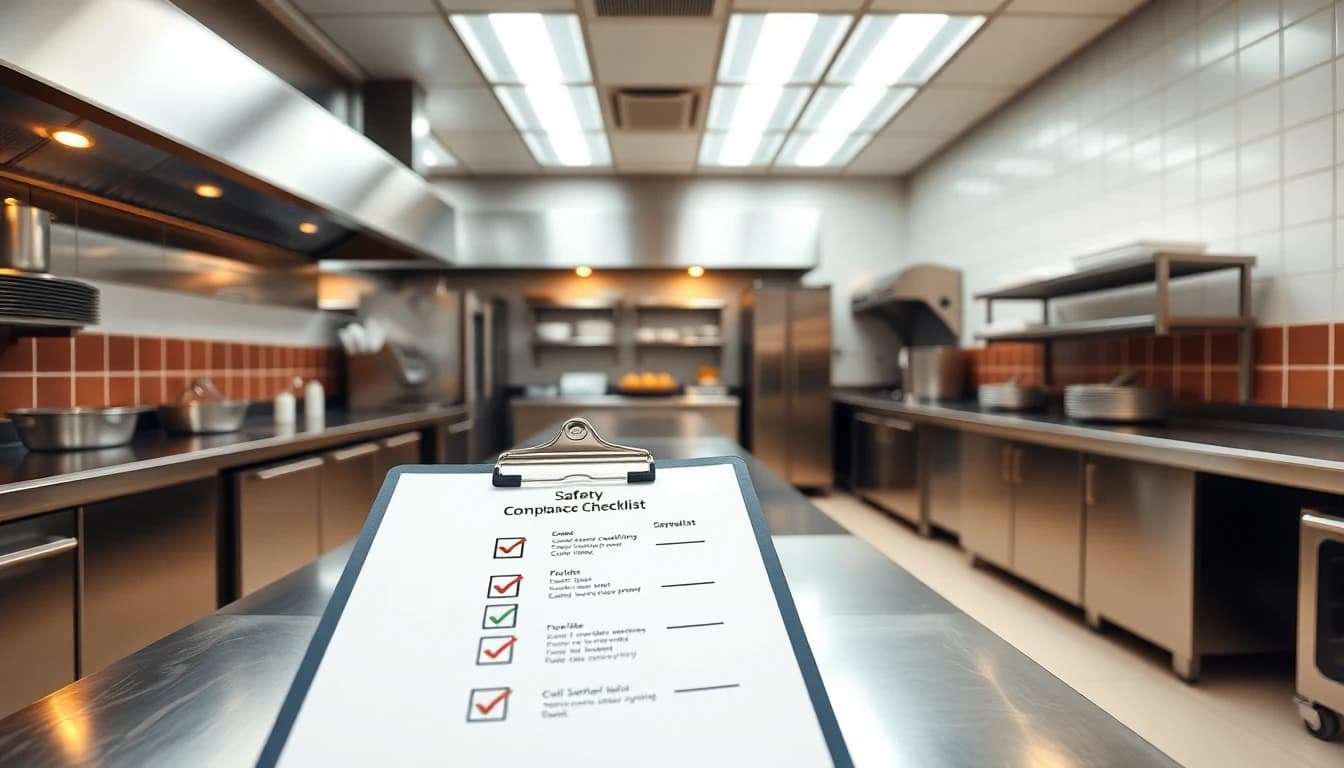
Walk through your restaurant monthly with a checklist covering:
- Exit routes clear and properly marked
- Fire extinguishers accessible and inspection tags current
- Chemical containers properly labeled
- First aid kits stocked
- Equipment in good repair
- Floors clean and non-slip mats in place
Document each inspection with the date, findings, and corrective actions taken.
Post required notices
OSHA requires the "Job Safety and Health — It's the Law" poster displayed where employees can see it. You also need to post the OSHA 300A annual summary during the required period and any citations received from previous inspections.
Know your rights during an inspection
When an OSHA compliance officer arrives:
- Ask for identification and credentials
- You have the right to have an opening conference
- Accompany the inspector during the walkthrough
- Take notes on everything the inspector examines
- You can request a closing conference to discuss findings
- You have 15 business days to contest any citations
State-specific requirements
Federal OSHA sets the minimum standard, but many states operate their own OSHA-approved programs with additional requirements. States with their own programs include California (Cal/OSHA), New York, Michigan, Washington, Oregon, and about 20 others.
State programs must be "at least as effective" as federal OSHA, which often means stricter requirements. For example:
- California requires a written Injury and Illness Prevention Program (IIPP) and heat illness prevention plan
- New York has specific requirements for workplace violence prevention
- Washington requires accident prevention programs with specific industry content
Check with your state's occupational safety agency to understand requirements beyond the federal baseline.
Building your restaurant safety plan
A comprehensive restaurant safety plan should include these sections:
Company information and policy statement
Start with your restaurant's name, location, and a clear statement of your commitment to workplace safety. Include the name and contact information of the person responsible for safety compliance.
Hazard assessment
Document the specific hazards in your restaurant. Walk through every area — kitchen, prep stations, walk-in coolers, dining room, dishwashing area, receiving dock — and identify what could injure an employee.
Standard operating procedures
For each identified hazard, write a clear procedure for safe operation. These should be specific and actionable. For example, rather than "be careful with knives," write out the specific cutting techniques, required PPE, and procedures for reporting dull blades.
Emergency procedures
Document procedures for fires, medical emergencies, natural disasters, active threats, and utility failures. Include evacuation routes, assembly points, and emergency contact numbers.
Training program
Outline what training each role requires, when it will be delivered (new hire orientation, annual refreshers), and how it will be documented.
Incident reporting and investigation
Create a clear process for employees to report injuries, near-misses, and hazards. Include investigation procedures to identify root causes and prevent recurrence.
The cost of non-compliance
OSHA penalties have increased significantly in recent years. Current penalty ranges include:
| Violation Type | Maximum Penalty |
|---|---|
| Serious | $16,131 per violation |
| Other-than-serious | $16,131 per violation |
| Willful or repeated | $161,323 per violation |
| Failure to abate | $16,131 per day |
Beyond fines, non-compliance can lead to increased workers' compensation premiums, lawsuits from injured employees, negative publicity, and difficulty hiring.
How ComplyStack helps
Creating a comprehensive safety plan from scratch takes most restaurant owners weeks of research and writing. ComplyStack generates a complete, state-specific OSHA safety plan for your restaurant in minutes.
Simply enter your restaurant type, state, and employee count, and our AI generates a professional safety plan covering all federal and state requirements. You can download it as a PDF or Word document, customize it for your specific operation, and keep it updated as regulations change.
ComplyStack generates state-specific compliance documents tailored to your business. No legal expertise required — just answer a few questions about your restaurant and download your complete safety plan.